
Supreme Court Issues Safety Directions for Delhi-NCR After Suo Motu Case on Sexual Assaults
A bench led by Justice J.B. Pardiwala has ordered intensified patrolling, driver verification and command-centre monitoring, and warned top Delhi officials they could be held personally answerable.
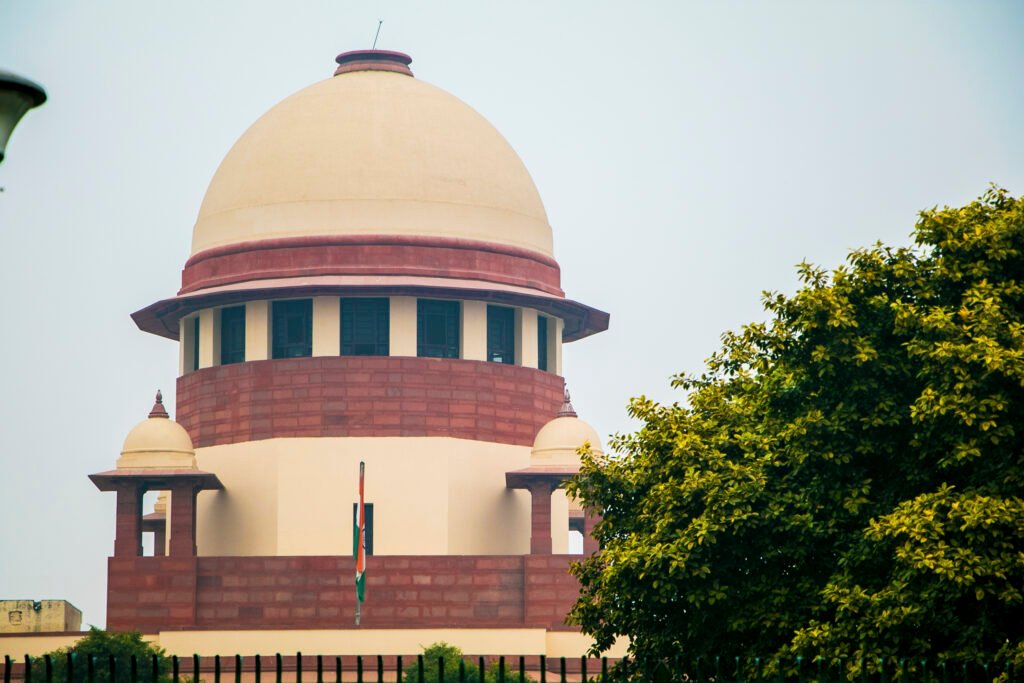
The Supreme Court has laid out a set of immediate directions to improve the safety of women and girls in Delhi-NCR, in a suo motu case taken up after reports of sexual assaults in the capital region. A bench of Justices J.B. Pardiwala and K. Vinod Chandran heard the matter on 5 October, and a formal 25-page order was published on 8 October, ThePrint reported.
The Court took cognisance of the issue on 28 September. According to Deccan Chronicle, the case relates to the alleged gang rape of a 16-year-old girl who boarded a sleeper bus in Greater Noida; she was allegedly assaulted by the bus conductor and driver and left near Kashmere Gate, more than 40 km away. Both accused have been arrested, the report said. The bench said reports of rape cases in Delhi-NCR “starkly underline a systematic failure on the part of the law enforcement” and recalled the 2012 Nirbhaya case.
The order contains six immediate directions for Delhi Police, the local administration and the transport department, according to ThePrint. They include intensified beat patrols, especially around educational institutions, and mandatory verification of drivers and assistants of buses, app-based cab aggregators, taxis and rickshaws, with vehicles displaying the verified driver’s name and photograph. The Court also asked authorities to link vehicle tracking devices with the police emergency response system, run awareness drives on SOS buttons, remove trucks habitually parked unlawfully and creating blind spots, and act against unauthorised liquor outlets.
On accountability, the Court named the Delhi government’s Chief Secretary and the Delhi Police Commissioner as the officers responsible for filing compliance affidavits. It warned that they “shall be made personally answerable” if the directions are not taken seriously, ThePrint reported. The bench also cautioned that preventive policing cannot justify “arbitrary or excessive” police action. Invoking the ‘broken windows’ theory, it observed that visible neglect, such as broken streetlights or non-functional CCTV cameras, can signal weak monitoring.
The two officers have also been asked to file a joint report on whether control-room command centres exist in Delhi, how many there are and how they coordinate in real time. The Police Commissioner must submit weekly reports on the drives of the Shishtachar Squads, which are meant to curb harassment of women, and the Court sought a status report on Operation Nirbheek and the Nazuk scheme, ThePrint said.
Consolidated status reports and affidavits are due by 6 November, and the matter returns to court on 16 November, when Joint Commissioners of Police who attended the 5 October hearing must appear in person. Verdictum’s weekly summary of Supreme Court judgments also listed the order among the week’s major rulings. The directions are administrative and safety measures; the criminal cases themselves remain with the trial courts.