Half of India’s area under drought, monitor says, as dry spells strain farms and rural incomes
An IIT Gandhinagar monitor put 51.2 per cent of the country's area in drought on 23 September, and several states have since identified drought-hit tehsils, according to an analysis published by The Core.
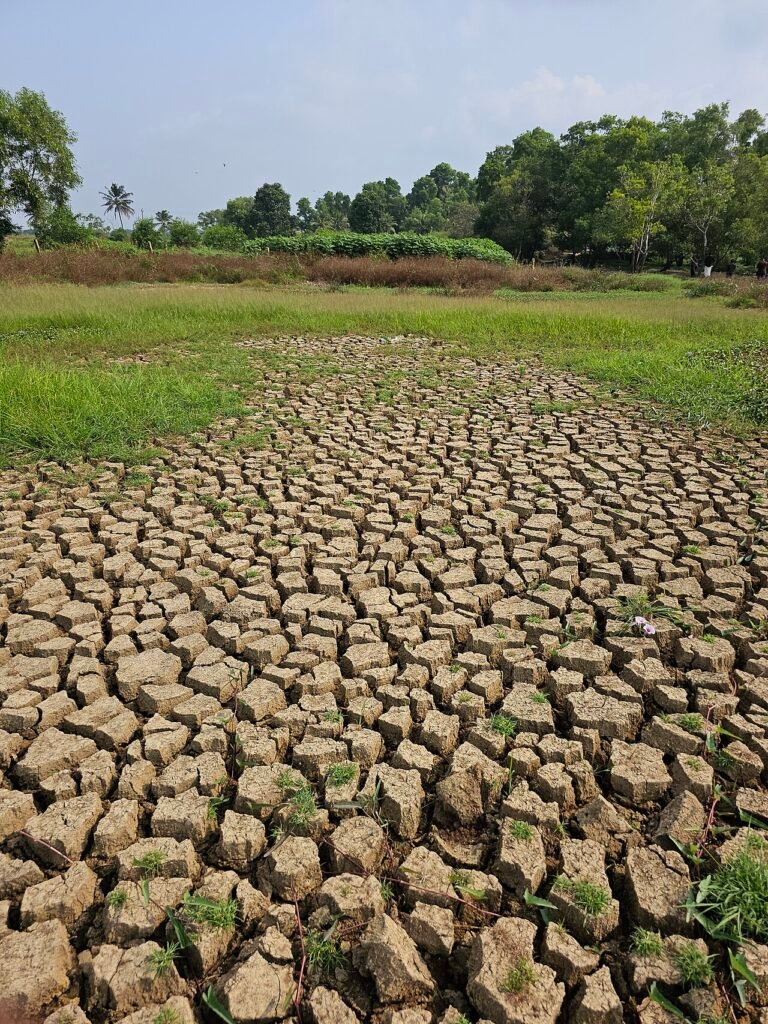
About half of India's geographical area was in drought on 23 September, according to the India Drought Monitor run by IIT Gandhinagar, as a weak monsoon and long dry spells left soils parched across large parts of the west and south. The figure, 51.2 per cent of the country's area, was up from 46 per cent on 2 September, according to an analysis published by The Core on 13 October.
The analysis put the monsoon deficit at 12 per cent between 1 June and 28 September, with Punjab, Bihar and Karnataka among the states showing the sharpest shortfalls. Business Today, citing the India Meteorological Department, reported earlier that August rainfall was 16 per cent below normal and that the month was the hottest August since 1901, with El Niño named as one contributing factor.
The Core noted that national kharif sowing was down only 1.21 per cent from a year earlier, according to the agriculture ministry's portal, but said this does not capture crops that wilt after dry spells. It also cited a Central Water Commission reading of 24 September that reservoir storage stood at 70.8 per cent of capacity, 11.5 per cent below the ten-year average.
Several states have begun formal drought identification. According to the analysis, Maharashtra has declared 265 of its 358 tehsils drought-hit, Karnataka has identified 177 of 240 taluks, Andhra Pradesh 388 of 688 mandals in 21 districts, and Rajasthan 117 of 425 tehsils. Telangana has asked the Centre to declare 235 of its 621 mandals drought-affected. Maharashtra announced a Rs 36,585 crore loan waiver in July, while Karnataka announced an input subsidy of Rs 2,500 for 40 to 50 lakh farmers, the analysis said.
The piece also examined the rural safety net. It reported that the national employment guarantee scheme was replaced from 1 July by a new programme called VB-G RAM G, and that person-days of work created from July to September fell 32 per cent, from 418 million to 284 million. Average days of work per household were 17 through September of this financial year, against 43.2 in the whole of the previous year, it said. These are the author's calculations from official data and have not been confirmed by the government in the article.
Prices are also rising in the countryside. Rural inflation went up from 4.84 per cent in July to 5.23 per cent in August, and rural food inflation from 5.79 per cent to 6.13 per cent, the analysis reported.
Looking ahead, the World Meteorological Organization said on 3 September that El Niño was expected to become very strong, raising the risk of extreme weather into 2027. The analysis cited the Ministry of Earth Sciences as pointing out that only seven of the 16 El Niño years since 1950 brought below-normal rainfall, so the link is not automatic. It also noted that India's drought manual dates from 2016 and has not been revised.