
K.N. Singh: Hindi cinema’s first ‘gentleman villain’
Born on 1 September 1908 in Dehradun, K.N. Singh changed the face of the Bollywood villain with his suave, cold-eyed style across nearly five decades and about 200 films.
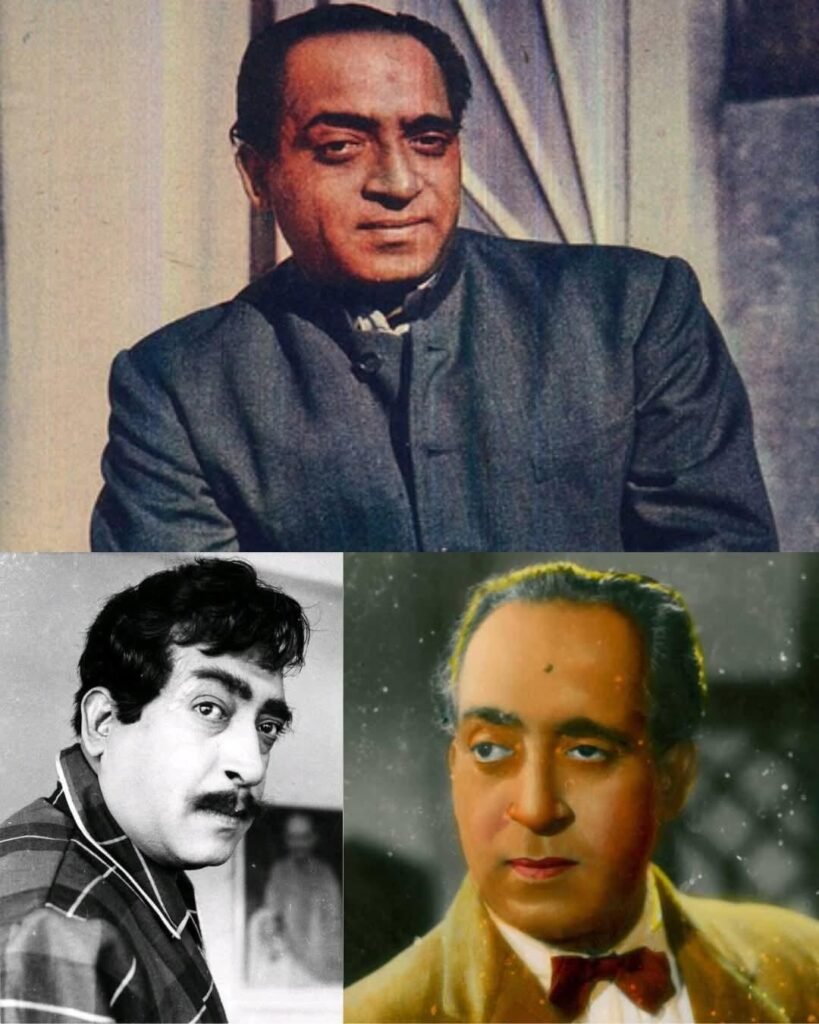
K.N. Singh: Hindi cinema’s first ‘gentleman villain’
Whenever villains of the Hindi screen were discussed, one name stood apart: Krishna Niranjan Singh, better known as K.N. Singh.
Born in Dehradun on 1 September 1908, this actor transformed the face of villainy in Indian films. He became not just a polished, cool-headed villain, but one who frightened audiences to the core even in a three-piece suit and hat.
From displeasure with his father’s profession to films
K.N. Singh’s family was highly respected. His father was a well-known criminal lawyer in Dehradun, and naturally wanted his son to practise law too. Preparations to send him to England were complete, but one incident changed the course of his life.
In one case, his father got a notorious criminal declared innocent in court. The incident deeply upset the young Krishna Niranjan Singh, and he told his father plainly that he would not practise law. His sensitivity to truth and justice turned him away from legal studies, and a new chapter of his life began.
Meeting Prithviraj Kapoor and the first step
Around this time he had to go to Calcutta on urgent work and stayed there for several days. There he met Prithviraj Kapoor, who was by then established in theatre and films. The meeting became the turning point of his life. Prithviraj Kapoor inspired him towards films and got him a small role in Sunehra Sansar (Sonar Sansar in Bengali), made under the New Theatres banner.
In this film directed by Debaki Bose, K.N. Singh played a doctor. Though the role was small, it marked his entry into films. He then worked in a few more films in Calcutta before moving to Mumbai with A.R. Kardar.
Villainy begins with ‘Baghban’
His first film in Mumbai was Baghban (1937), in which he played a villain for the first time. The film became the decisive turning point of his career. Until then, villains in Hindi films were mostly cruel-faced, heavily built and frightening. K.N. Singh changed that image completely.
Though a villain, he always appeared on screen in a suit and boots, speaking politely and with great refinement. His silent gaze and cold smile were enough to send shivers down the audience’s spine. That is why he was called cinema’s first “gentleman villain”.
A brilliant career of five decades
K.N. Singh worked in films for nearly five decades and left his mark in about 200 films. He gave fine performances not only as a villain but also in character roles.
His major films and memorable roles
Baghban (1937) – first recognised as a villain.
Kala Pani (1958) – a powerful negative role opposite Dev Anand.
Kanoon (1960) – a mysterious character in the unusual film without songs.
Humrahi (1963) – a cold-minded villain.
Aradhana (1969) – a police officer in Rajesh Khanna’s superhit film.
Ittefaq (1969) – a menacing presence in a suspense thriller.
Ajnabee (1974) – an effective role opposite Rajesh Khanna.
Betaab (1983) – a negative role in Sunny Deol’s debut film.
Hum (1991) – a mafia don in Amitabh Bachchan’s blockbuster.
Rare facts and interesting anecdotes
Also an athlete – Before films he had made a name in athletics. He was a good 400-metre hurdler and shot-putter and was preparing for the 1932 Olympics, but missed selection at the last moment.
Disciplined life – He was very strict about food and habits, staying away from addictions such as cigarettes, alcohol and tobacco.
Fashion-icon villain – He showed for the first time in cinema that a villain could also appear in a three-piece suit and hat.
Magic of his voice – His deep, drawn-out voice became his greatest identity.
Professional attitude – He always reached the set on time and delivered dialogues with full preparation. Directors and co-actors respected him greatly.
K.N. Singh was not just an actor but an artist who redefined villainy in Hindi cinema. He proved that a villain need not be merely a frightening face but could also be a gentleman with a refined personality and cold eyes.
His journey carried the message that sometimes the paths of life were changed by a small incident. Had he not been upset with his father’s profession, Indian cinema might never have got this unique and memorable villain.